


When customers search for a business online, its website often shapes their first impression. They want to understand its services, find useful information and know how to get in touch.
A poorly developed website can drive them away, while a well-built one can build trust and generate enquiries.
Choosing the right web development company in Nepal is an important step towards building a website that meets your business needs. From reviewing previous projects and technical skills to comparing costs, ownership and ongoing support, here’s what to consider before making your decision.
1. Understand Your Website Requirements Before Hiring
Before contacting any web development company, first understand what your site actually needs. For example, a trekking agency might need an itinerary page, an inquiry page, and a photo gallery, while an online store needs product listings, payment options, and order management. These are quite different projects, so their development costs will be different too.
Start with four questions:
- What is the website’s main job? Bookings, inquiries, sales, or information.
- Who will use it? Foreign tourists, local customers, or both.
- Which pages and features do you need.?
- Who will update it after launch? You, your staff, or the company.
You don’t need a lengthy technical document. Even a one-page brief gives developers something specific to work with and makes their quotations much easier to compare.
2. Check the Web Development Company’s Portfolio and Previous Work
A Company can have an impressive portfolio, but we can’t judge its work only by its screenshots. Visit the actual websites and check how they look and function on both mobile and desktop. Pay attention to loading speed, navigation, working forms and how easily visitors can find information.
Look for different types of projects, such as business websites, e-commerce stores and booking platforms. This helps you understand whether the company can handle your requirements. Also, check its own website for information about its services, previous work and client feedback.
If possible, speak with one or two previous clients. Their experience can give you a clearer idea of the company’s communication, work quality and reliability after launch.
3. Evaluate Their Technical Skills and Website Quality
You don’t need to understand programming to recognise a poorly built website. A few practical checks can tell you quite a lot about the company’s technical standards.
- Responsive design and mobile experience.
- Speed and performance.
- SEO-friendly structure.
- Security and basic functionality.
4. Understand Their Development Process and Timeline
A professional company should be able to explain how your website will move from an initial idea to a finished product. Usually, this involves planning, design, development, testing and launch.
Ask what happens at each stage and when you’ll get the chance to review the work. For instance, will you approve the homepage design before the developers build the remaining pages? How many revision rounds are included? These details can prevent unnecessary disagreements later.
The timeline deserves the same attention. A simple business website and an e-commerce platform with payment integration won’t take the same amount of time. Instead of accepting a vague promise to finish everything in two weeks, ask for a schedule with clear milestones.
Also, be realistic about your own responsibilities. If you haven’t provided the content, photographs or product information, development can slow down even when the company is doing its part.
5. Compare Website Development Costs and Quotations
Website development costs in Nepal vary depending on the project’s size, features, design requirements and the experience of the team. So, if someone gives you a fixed price without asking what you need, be careful. Ask every company for an itemised quotation and compare the same items across all of them.
Check what each quote includes:
- Design, development, and number of pages
- Domain registration and hosting
- Content, images, and copywriting
- Basic SEO setup
- Training and handover
- Revision rounds
When comparing quotations, make sure every company is pricing the same requirements. A cheaper offer isn’t necessarily better if important services have been left out. What matters is what you receive for the amount you pay.
6. Confirm Website Ownership and Access
This is one detail many business owners overlook; until something goes wrong, your website should remain under your control even if it is developed and managed by the developer.
Ask For:
- Domain and hosting. Both should be registered in your name or your business email, even if the company manages them.
- Website files and source code. Ask whether you receive them at handover.
- CMS and admin access. You need your own administrator login, such as for WordPress.
- Essential accounts. This includes Google Analytics, Search Console, and any third-party tools set up for you.
A company that manages your website should make your work easier, not leave you dependent on it for every small change.
7. Review the Contract and Payment Terms
Before work begins, get the agreement in writing. A contract doesn’t have to be complicated, but it should clearly explain what the company has agreed to deliver.
Check that the scope includes the number of pages, required features, content responsibilities and any services excluded from the quotation. If something was promised during a meeting, make sure it appears in the agreement.
Payment terms deserve a closer look. Many projects use an initial advance followed by payments at agreed milestones. This is generally easier to manage than paying the full amount before seeing any work.
Also clarify how many revisions are included, what additional changes will cost and what happens if the project is delayed. Most importantly, define when the website is considered complete and when the final files and access details will be handed over.
A little clarity at this stage can save both sides a lot of frustration later.
8. Check Communication, Reviews and Ongoing Support
Pay attention to how companies communicate before you hire them.
Do they answer your question properly? Do they explain the technical matter in understandable language, or do they have to follow up several times to get the basic question?
This may give insight into how you would work with the company
Speak with previous clients if possible. Ask whether the company delivered what it promised, how it handled unexpected problems and whether it remained available after launch.
And don’t forget post-launch support. Find out whether there’s a free support period, what maintenance covers and how quickly the company responds when something breaks.
Get the support arrangements in writing rather than relying on a casual promise that the company will always be available.
9. Watch Out for Red Flags Before Hiring
Some warning signs are easy to miss when you’re excited about getting a new website.
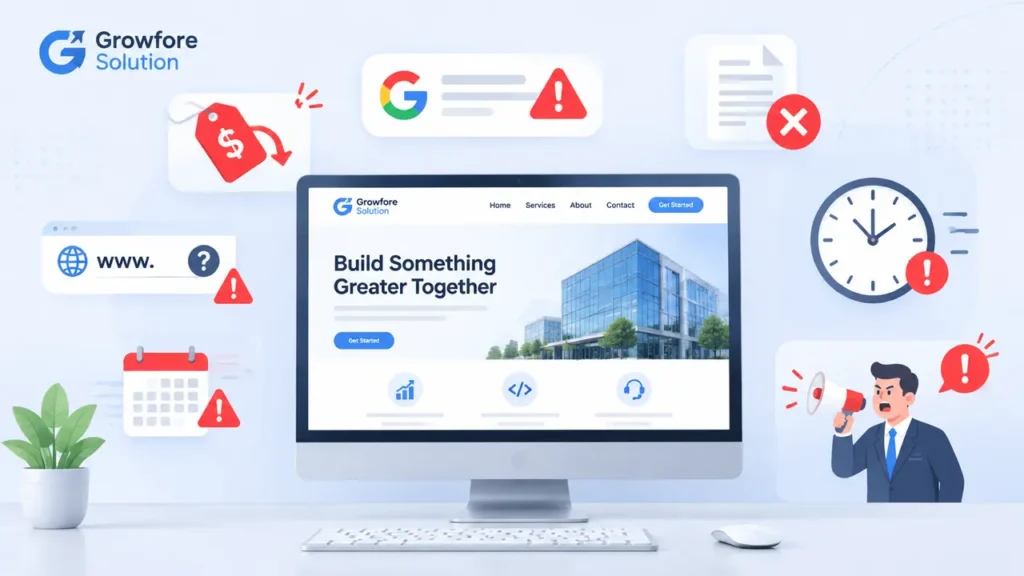
Be cautious if a company promises guaranteed Google rankings, offers an unusually low price without understanding your requirements, or pushes you to make an immediate decision.
- Unrealistically cheap quotations. The impact is often hidden costs or rushed work. Ask what has been left out.
- Guaranteed Google rankings. No one can promise this. Google’s own guidance explains that nobody can guarantee a top ranking. You risk paying for a promise that cannot be kept.
- No written agreement. If disputes arise, you have nothing to refer to. Insist on a contract.
- Unclear ownership terms. You could lose control of your own domain or site. Get ownership confirmed in writing.
- Unrealistic delivery promises. A very fast timeline often means skipped testing. Ask how they plan to meet it.
- Pressure to decide immediately. A “special price expires today” line leaves you no time to compare. A good company allows you to think.
Conclusion
A good web development company doesn’t just deliver a website and disappear. It understands your requirements, explains its process, provides a realistic quotation and makes sure you retain control of the finished website.
Before making a decision, shortlist two or three companies and give them the same project brief. Compare their previous work, technical approach, costs, ownership terms and post-launch support.
Don’t let an attractive design or the cheapest quotation make the decision for you.
If you’re planning a new business website or want to improve an existing one, Growfore Solution’s web design and development services can help you understand the requirements and explore the right development options for your business.
Not sure where to start? Contact our team to discuss your project and find out how we can help.
Frequently Asked Questions
How much does it cost to hire a website development company in Nepal?
The cost depends on the website’s size, design, features and development requirements. A basic business website will generally cost less than an e-commerce platform or custom application. Request itemised quotations in NPR and check whether hosting, domain renewal and maintenance are included.
How long does website development usually take?
A simple business website may take a few weeks, while an online store or custom web application can take considerably longer. Your content, feedback and approval speed also affect the timeline. Ask for a milestone-based schedule before development begins.
Should I hire a freelancer or a website development company?
A freelancer can be a suitable choice for a small project with limited requirements. A development company may be more appropriate when you need different services, such as design, development, testing and ongoing support. Whichever you choose, check their experience, availability and ownership arrangements.
What questions should I ask before hiring a web developer?
Ask about previous projects, development timelines, included features, total costs, revision limits and post-launch support. Also confirm who owns the domain, hosting and website files after completion.
Who owns the website after development is complete?
The business owner should retain ownership and control of the website. This includes the domain, hosting account, website files, database and administrator access. Make sure these arrangements are agreed upon in writing before the project starts.