


BuzzSumo and Ahrefs are two names that consistently appear in every marketer’s toolbox. Both tools serve high-level strategic functions, yet their core priorities are fundamentally different.
BuzzSumo is the ultimate content strategy engine, built for trend-spotting, viral content discovery, and social performance analysis. In sharp contrast, Ahrefs operates as the definitive SEO battlefield resource, specializing in deep technical analysis, massive backlink databases, organic keyword research, and comprehensive competitor intelligence.
This distinction is critical for teams deciding whether their growth priority is real-time content engagement or long-term search engine authority.
If you’re caught between the two, this BuzzSumo vs. Ahrefs guide is your shortcut.
BuzzSumo vs Ahrefs Comparison Table
| Feature | BuzzSumo | Ahrefs |
| Core Focus | Tracks viral content, trends, and social engagement | Full SEO toolkit: keywords, backlinks, audits, ranks |
Content Research | Shows what’s trending and most shared on social platforms | Finds content that drives organic traffic via search |
| Keyword Tools | Pretty limited | Extremely detailed: volume, clicks, difficulty, SERPs |
| Backlink Data | Surface-level, tied to social shares | Huge database with deep link analysis |
| Competitor Tracking | Compares social reach and top-performing content | Tracks competitor traffic, backlinks, and keywords |
| Site Audits | Not available | Full SEO health audits and fixes |
| Rank Tracking | Not offered | Advanced tracking with competitor benchmarks |
| Social Features | Strong: influence search, engagement metrics, brand alerts | Minimal: not focused on this feature |
| Reports | Visual, easy for storytelling and PR | Data-heavy, customizable SEO reports |
| Free tools | No real free option | Some free checkers (keywords, backlinks, etc.) |
| Pricing | $199/month for content creation | $129/month for the lite version |
BuzzSumo and Ahrefs guide
In the world of digital marketing, every second counts and every click matters. The tool you choose for your agency, enterprise, or blog shapes whether your content floats the algorithmic waves to the top.
Failing to choose the right SEO tool isn’t just a minor slip; it can cost you traffic, visibility, and hours of wasted effort. So, in this BuzzSumo and Ahrefs comparison guide, we’ll break down their features, strengths, and trade-offs. From content research to backlink tracking, so you know exactly which tool fits your marketing strategy.
What is BuzzSumo?
BuzzSumo is a content research and social listening tool that helps marketers figure out what’s trending online. It tracks the most-shared articles, videos, and posts across social platforms, so you can see what’s actually working in your niche.

Jumping into content marketing without knowing what’s trending is like throwing darts blindfolded. You might hit, but chances are you’ll miss. That’s where BuzzSumo steps in.
Beyond spotting viral topics, it also helps you find influencers, monitor brand mentions, and analyze engagement patterns. In short, BuzzSumo gives you the pulse of the internet so your content connects instead of disappearing into the noise.
While it shares a few similarities with popular SEO tools, BuzzSumo’s main strength lies in social listening and content research.
BuzzSumo Key Features
BuzzSumo is popular for its content toolset with various tools that can help you strengthen your content strategy gameplay.
- Content Discovery
- Keyword Tool
- Content Research
- Backlink analyzer
- Influencer Search
- Brand Monitoring
1. Content Discovery
The Content Discovery feature in BuzzSumo is built to help marketers and creators spot what’s trending right now.
It scans millions of web pages, blogs, news sites, and social platforms to highlight the most popular topics and articles based on engagement.

By using Content Discovery, you can plan campaigns around proven topics, avoid wasting time on content that won’t land, and keep your strategy aligned with what audiences are actually engaging with.
2. Keyword Tool
BuzzSumo’s other major tool is the Keyword tool, which helps identify trending terms and topics.
It helps you see what your audience is searching for, giving insights for content planning, topic clusters, and targeting keywords that drive engagement.
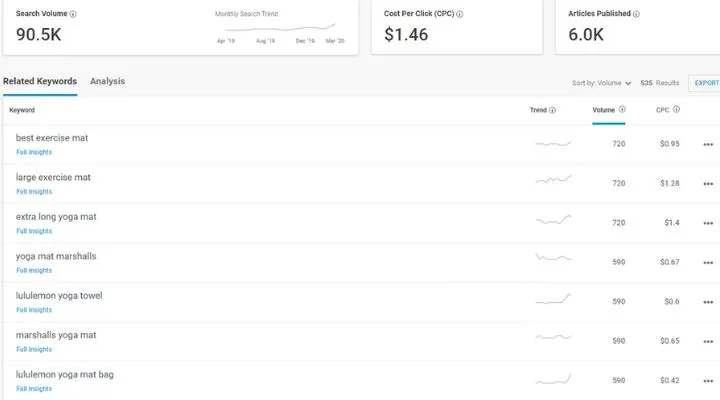
The Keyword Tool can also be used for competitor analysis by entering a domain to see which keywords it ranks for.
It highlights content ideas and keyword opportunities using real-time data, helping your SEO strategy by revealing what your audience searches for and how frequently.
3. Content Research
The Content Research feature helps you understand which topics, formats, and channels perform best in your industry, be it beauty, tech, medicine, or many more!
By analyzing millions of articles, blog posts, and social updates, BuzzSumo shows you what content earns the most shares, engagement, and backlinks.
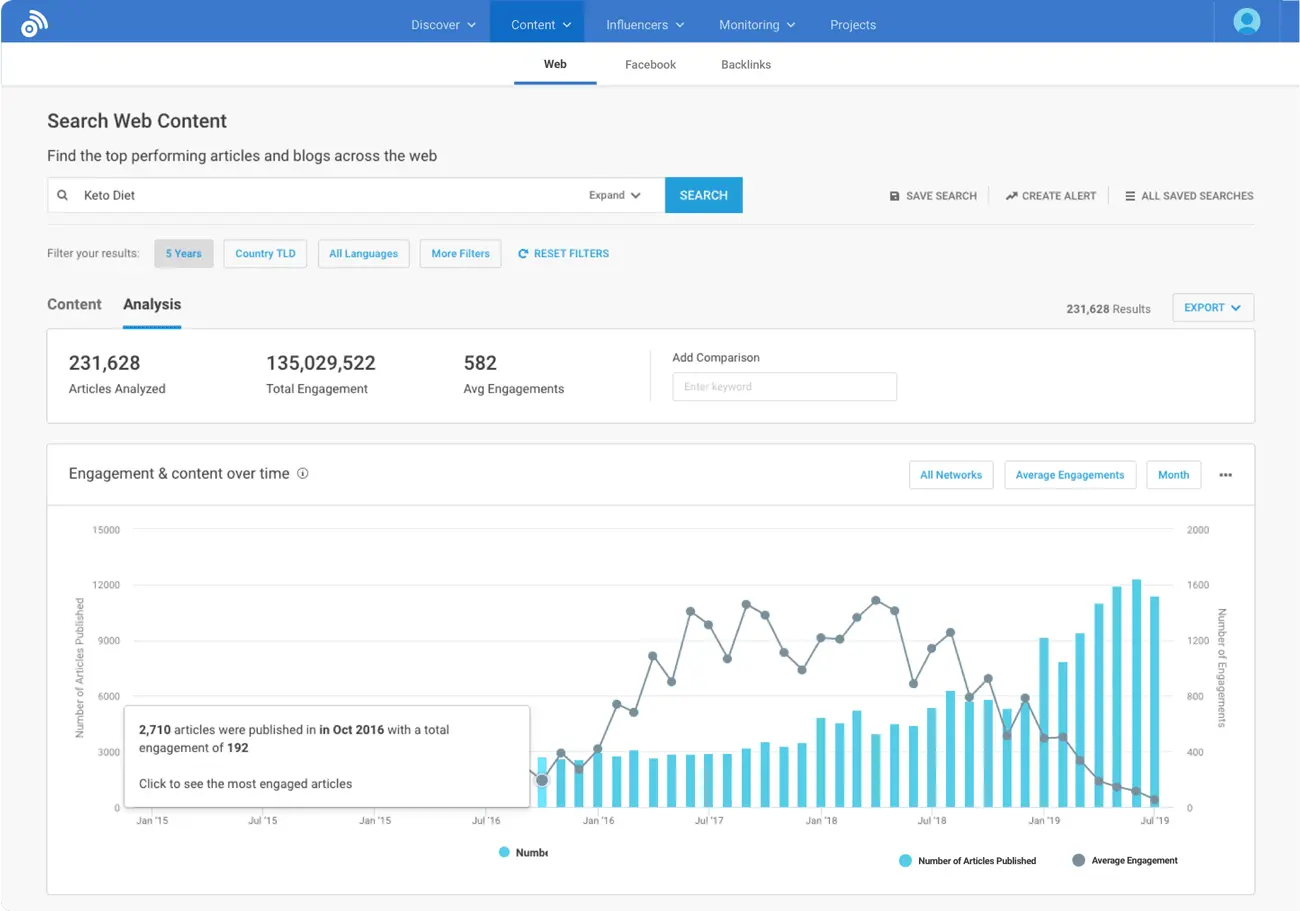
BuzzSumo shows you what content earns the most shares, engagement, and backlinks.
You can filter results by date, platform, or domain to see both current trends and long-term evergreen performers.
This makes it easier to spot gaps in your strategy, learn from competitors, and create content that aligns with audience interests.
4. Backlink analyzer
BuzzSumo’s Backlink Analyzer gives you a clear view of who’s linking to your site and to your competitors, helping you uncover new opportunities to grow authority.
You can filter backlinks by social engagement to see which ones actually drive attention and set up instant alerts so you’re notified as soon as new links appear.

With real-time updates, the tool ensures you’re always working with the latest data, and you can easily export reports into Excel for deeper analysis or team reporting.
In short, it turns backlinks into actionable insights you can use to sharpen your SEO and outreach strategy.
5. Influencer Search
BuzzSumo’s Influencer Search isn’t just about follower counts; it’s about finding voices that truly move things in your industry.
With access to millions of articles and profiles, this tool helps you discover influential creators, journalists, and thought leaders across platforms like Instagram, Twitter, YouTube, and the wider web.

It offers real tools to build an outreach list of journalist profiles, influencer metrics, and content context, allowing you to personalize your approach.
You gain flexibility, being able to benchmark against competitors and target the exact type of influencer you need.
BuzzSumo Pricing
BuzzSumo offers four pricing tiers, each with its own set of features and user limits. The entry-level Content Creation plan gives access to most SEO-focused reports but does not include monitoring or media reporting tools.
- Content Creation: $159 per month (paid annually)
- PR & Comms: $239 per month (paid annually)
- Suite: $399 per month (paid annually)
- Enterprise: $999 per month (paid annually)
Check our BuzzSumo pricing for more!
BuzzSumo Reviews
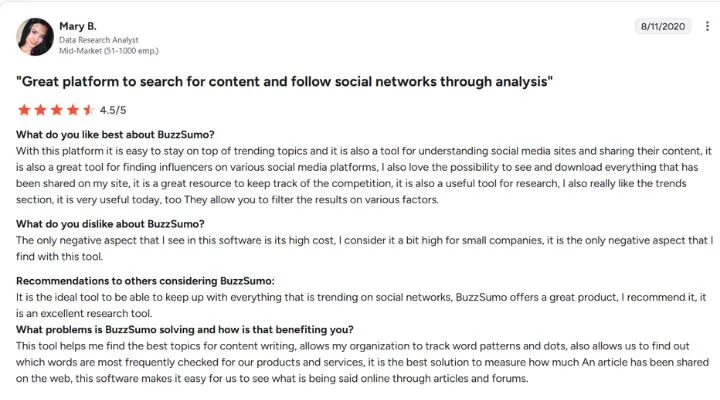
Many reviews highlight the power and practicality of BuzzSumo’s tools, but the main downside people point out is its cost. This review, published on G2, summed it up perfectly.
This is it for BuzzSumo! Let’s go forward to Ahrefs.
What is Ahrefs?
Ahrefs is one of the most widely used SEO platforms, built to help marketers, content creators, and businesses improve their search visibility.
Ahrefs is an SEO powerhouse specializing in keyword research, backlink analysis, competitor tracking, and site audits.
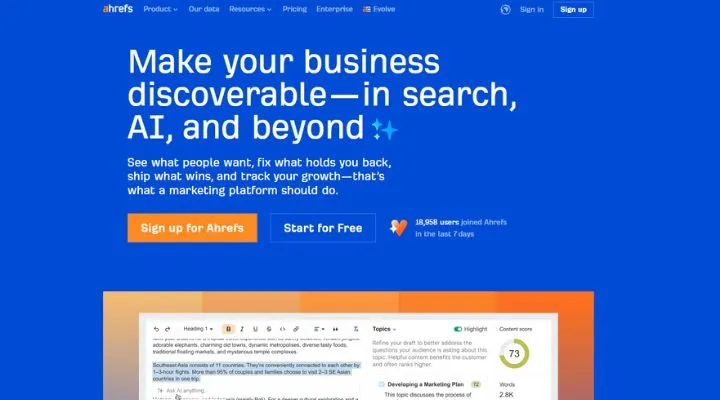
With one of the largest live backlink indexes in the industry and data pulled from billions of web pages daily, Ahrefs gives you a detailed look at how sites rank, where their traffic comes from, and what strategies they’re using.
It’s the tool you turn to when you want hard data on search performance, technical SEO issues, and ranking opportunities. Ahrefs isn’t just for solo marketers or small teams; it scales.
In Standard mode, you get access to core SEO tools perfect for freelancers, bloggers, or small businesses who just need to handle keyword research, audits, and backlinks.
But when you step up to Enterprise mode, the game changes. Ahrefs is one of the best enterprise tools available, offering advanced user management, API access, custom reporting, higher crawl limits, and priority support.
Ahrefs Key Features
Ahrefs is one of those all-in-one SEO power tools that feels like a whole arsenal packed into one platform. Its listed features cover everything you need to step up your SEO marketing game.
- Search Marketing
- Website Performance
- Content Marketing
- Reporting
- Local SEO
1. Search Marketing
Ahrefs packs a solid search marketing toolkit that makes it easier to understand competitors, find growth opportunities, and keep your brand in check.
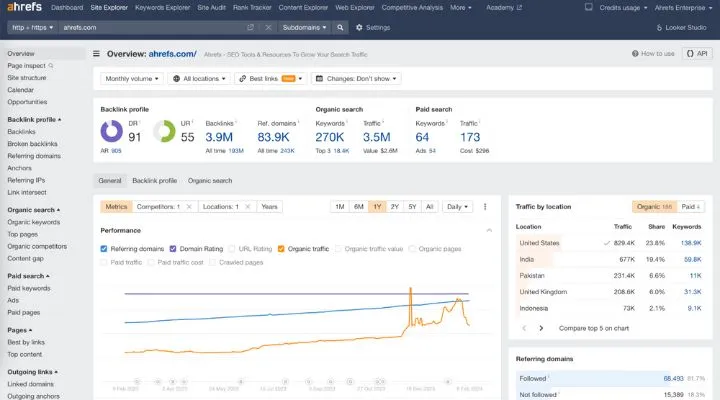
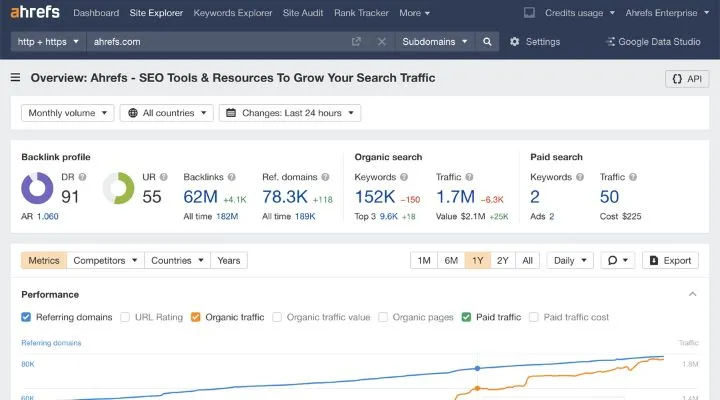
Site Explorer lets you dig deep into any website’s performance, uncovering backlinks, top-ranking pages, and traffic insights so you can see what’s driving results. It provides you with reports like:
- Overall organic keyword count
- Total organic search traffic
- Paid keywords with traffic data
- Complete backlink profile
- List of organic keywords
- Top-performing organic pages
- Main organic competitors
- Referring pages and domains in backlinks
- Competitor’s outbound links
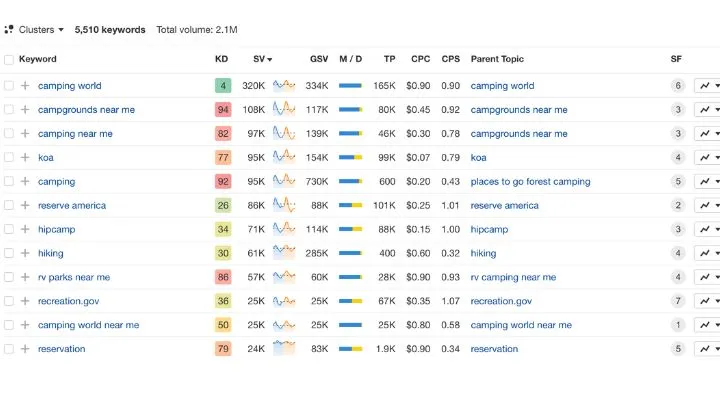
Keywords Explorer lets you discover keyword ideas, analyze their difficulty, and understand traffic potential across different markets, helping you target terms that actually move the needle. It also provides data like cost per click (CPC) and search engine results page (SERP).
The Rank Tracker tool monitors how your site (or your competitors) climbs or drops in Google rankings over time. It lets you add the keywords you want to monitor and then shows exactly how your site ranks for them.
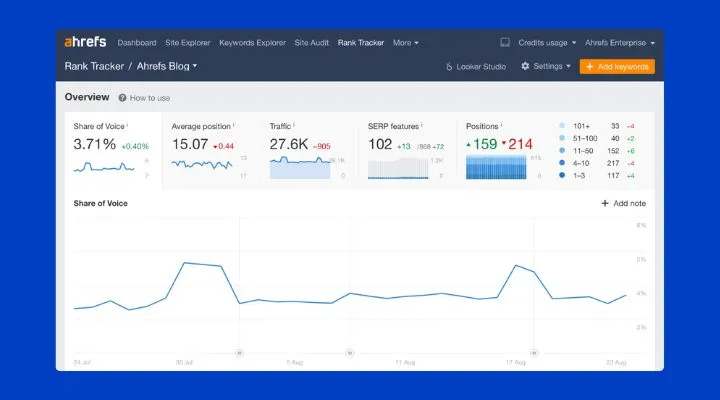
You can see whether you’re climbing, slipping, or holding steady, and also compare your positions against competitors in the same niche.
Brand Radar in Ahrefs is basically your online mention tracker. It keeps an eye on the web for whenever your brand, product, or chosen keywords pop up, whether in blogs, news sites, or forums.
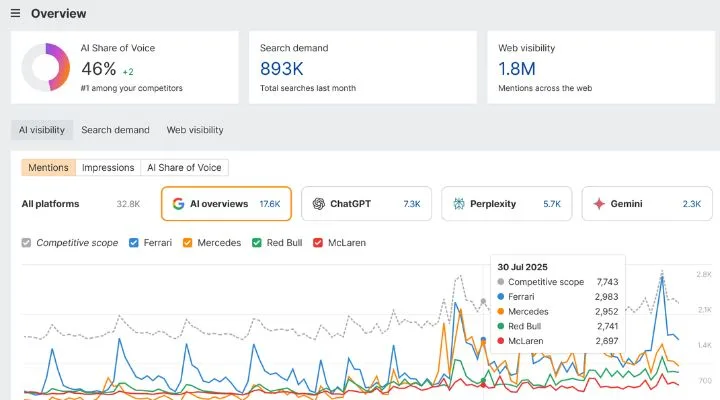
This way, you can monitor reputation, spot outreach opportunities, and even turn brand mentions into backlinks before they slip away.
2. Website Performance
Website performance in Ahrefs is all about keeping your site healthy and search-friendly.
The Site Audit tool crawls through your pages the way search engines do, spotting technical issues like broken links, slow loading times, duplicate content, or missing tags that could hurt your rankings.
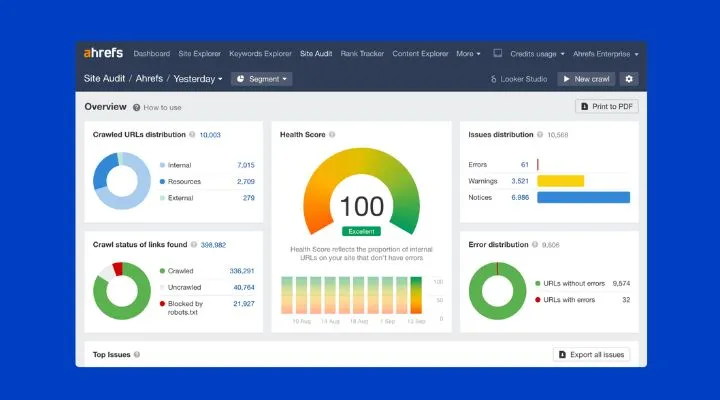
Alongside that, the Web Analyzer gives you a clear picture of how your site is performing overall, tracking factors like usability, crawlability, and SEO health, so you know exactly what’s working and what needs fixing.
3. Content Marketing:
Content Marketing in Ahrefs is built to help you find, create, and amplify content that actually drives results.
With the Content Explorer, you can search billions of pages to discover trending topics, evergreen pieces, and competitor strategies that earn the most shares and backlinks.
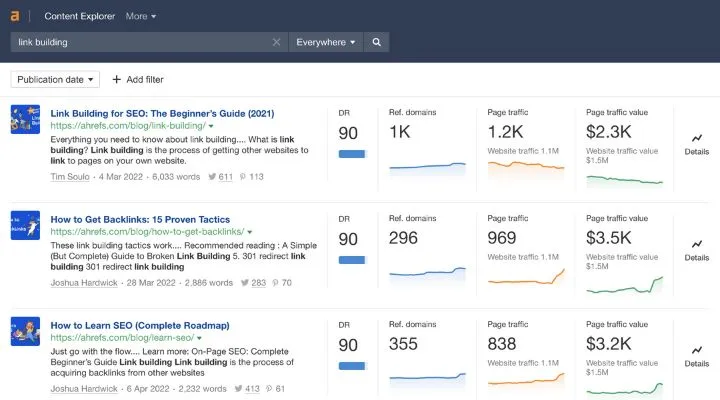
It’s like BuzzSumo’s Content Ideas and Backlink Analyzer tools, but instead of ranking content by social shares, it measures popularity based on referring domains and organic traffic.
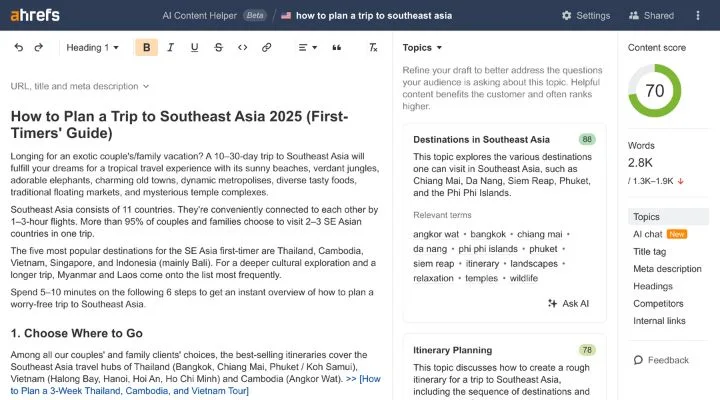
The AI Helper then steps in to speed up your workflow, generating ideas, summaries, and insights so you don’t waste time staring at a blank page.
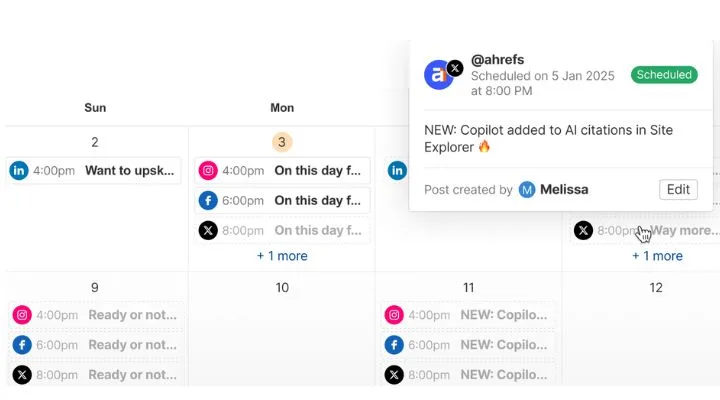
With the Social Media Manager, you can track engagement, schedule posts, and measure how your content performs across different platforms, making sure your message reaches the right audience at the right time.
Other features in Ahrefs include:
- Reporting: Lets you create detailed SEO and performance reports, track progress over time, and share insights with your team or clients in a clear, professional format.
- Local SEO: Helps businesses optimize for location-based searches, track local rankings, and identify opportunities to attract nearby customers.
Ahrefs Pricing:
- Free Plan: Perfect for beginners managing their own site.
- Starter ($29/month): Core tools like Rank Tracker, Site Audit, and Keywords Explorer with 100 monthly credits.
- Lite ($129/month): Ideal for freelancers or small sites: 5 projects, 750 tracked keywords, core SEO tools, and 6 months of data.
- Standard ($249/month): For growing teams: 20 projects, 2,000 keywords, Content Explorer, Batch Analysis, 2 years of data, unlimited credits.
- Advanced ($449/month): In-house SEO teams: 50 projects, 5,000 keywords, 5 years of data, 1.5M crawl credits, advanced integrations.
- Enterprise ($1,499+/month): Big agencies: everything in Advanced plus API access, unlimited historical data, custom limits, and priority support.
For full details, check out Ahrefs’ official pricing page.
Ahrefs Reviews
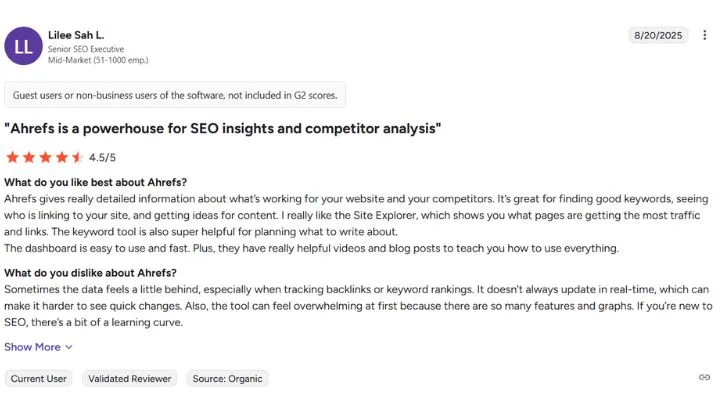
This Ahrefs review on GR suggests that Ahrefs provides in-depth insights on keywords, backlinks, and top-performing pages, with an easy-to-use dashboard and helpful learning resources. The downside is that data isn’t always real-time, and the platform can feel overwhelming for SEO beginners.
Ahrefs vs BuzzSumo: Quick Summary:
Ahrefs is a full-scale SEO powerhouse, ideal for tracking keywords, backlinks, site performance, and content opportunities, giving deep insights into both your site and competitors.
BuzzSumo, on the other hand, focuses on content discovery and social performance, helping you find trending topics, analyze engagement, and identify influencers. In short, Ahrefs is about SEO and traffic data, while BuzzSumo shines in content marketing and social insights.
BuzzSumo vs Ahrefs FAQs
1. Which tool offers better ROI for small businesses?
Ahrefs delivers high ROI for small businesses focused on organic traffic, SEO growth, and backlink analysis, while BuzzSumo shines for content marketing, viral content discovery, and influencer outreach.
2. Can you use BuzzSumo and Ahrefs together effectively?
Yes! Combine Ahrefs for keyword research, SEO optimization, and competitor insights with BuzzSumo for content ideas, social engagement, and trend tracking to maximize results.
3. Which tool is better for competitor analysis?
Ahrefs is the top choice for SEO competitor analysis, backlinks, and organic keyword tracking, whereas Buzz Sumo excels at social media competitor monitoring and content performance insights.
4. How do the reporting capabilities compare between the two tools?
Ahrefs offers customizable SEO reports and detailed analytics, perfect for tracking website growth. BuzzSumo provides visual content and social media reports, ideal for marketing campaigns.
5. What are the hidden costs and limitations of each tool?
Ahrefs limits monthly credits and single-user access on lower-tier plans. BuzzSumo’s basic plan excludes monitoring and media database features, requiring costly upgrades. Both tools cost more with monthly billing compared to annual subscriptions.
6. Which tool provides more comprehensive backlink analysis?
Ahrefs gives the most in-depth backlink data, referring domains, and link growth tracking to outrank competitors.
7. How do their keyword research capabilities differ?
Ahrefs excels in keyword difficulty, search volume, and traffic potential, while BuzzSumo focuses on content-driven keyword trends.
8. Which platform offers better content discovery features?
BuzzSumo leads with trending content, viral topics, and influencer-based insights, making content planning easier.
9. How do the user interfaces of Ahrefs and BuzzSumo compare in terms of usability?
Ahrefs is data-rich but slightly complex, great for SEO pros. BuzzSumo is simpler and more visual, ideal for marketers focused on content and social performance.
10. Which tool offers better customer support and resources?
Ahrefs provides tutorials, guides, and responsive support, while BuzzSumo offers helpful content and customer assistance, especially for content strategy.